



How to Plan a Product Launch: From Strategy to Post-Launch Growth
A product launch does not begin on launch day. Learn how to connect strategy, positioning, branding, digital, content, partners and post-launch activity into one coherent process.
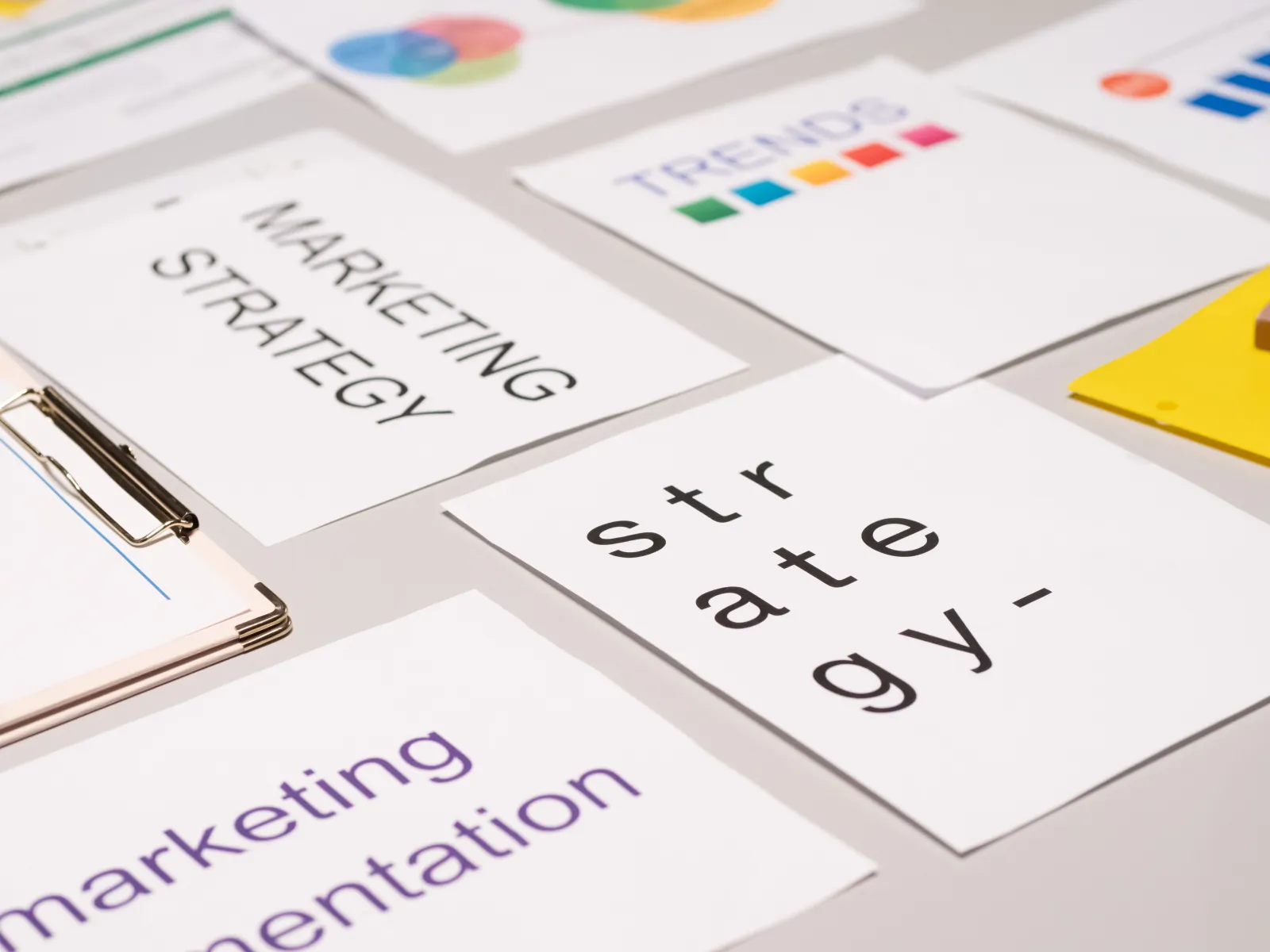
A product launch is often associated with a single date: the day a new offer goes live, sales begin, the press receives an announcement, and social channels start publishing the assets prepared for the campaign. In reality, a strong launch begins much earlier and lasts far longer than one day.
A launch is a process that brings together product strategy, communication, branding, digital, sales, content and marketing. When those elements are developed separately and only brought together a few weeks before release, it is easy to end up with a campaign that looks polished but fails to answer the most important customer question: why should I care about this product?
That is why at NHCreators we look at product launches as more than advertising campaigns. The product page, visual system, messaging, video, content, partner materials and post-launch communication should all come from the same strategy. A well-planned launch prepares the market, explains the product's value, builds interest before sales begin, and then turns the attention generated around launch into longer-term growth.
The goal is not simply to create noise on launch day. It is to build a complete communication system around the product.
1. Start with the objective, not the asset list
The first step should not be deciding how many social posts to publish or what kind of video to produce. Start by defining what the launch actually needs to achieve.

For one product, the main goal may be immediate revenue. For another, it may be lead generation, demo bookings or a waiting list. A company entering a new category may need to build awareness before it can realistically optimise for conversion. A brand launching the next generation of a successful product may be focused on convincing existing customers to upgrade.
Those differences have a major impact on the campaign. A launch designed for direct sales needs a different call to action from a B2B product with a six-month buying cycle. In B2B, the most important outcome may be qualified enquiries and booked demonstrations, while a consumer launch may be judged primarily on revenue, ecommerce conversion and traffic.
Before creative production begins, define the key launch KPIs. Reach and views can be useful indicators, but they only become meaningful when they are connected to the actual business objective.
This is also the point at which it is worth deciding how much support the project really requires. Through the NHCreators offer, we combine branding, websites, campaigns, content and motion so that the individual parts of a launch can be planned as one project rather than separate tasks handled by several disconnected teams.
2. Define exactly who the product is for
One of the easiest ways to create an unremarkable campaign is to try to communicate to everyone at once. Every product has customers for whom its value is particularly strong. The better you understand those people, the easier it becomes to create communication that addresses a real need rather than relying on broad claims.
It is not enough to define the audience as "businesses", "professionals", "young consumers" or "technology companies". You need to understand the situation that causes a potential customer to start looking for a solution. What are they doing today? What problem are they dealing with? How are they solving it without your product? What alternatives are they considering? What might stop them from buying?
This is where the foundation of the later campaign is built. A product never exists in a vacuum. It competes with another product, an established workflow, an internal solution or simply the decision to change nothing. Good launch communication makes the case for why change is worthwhile.
The shape of the launch will also vary between industries. A complex B2B technology product needs a different communication structure from an audio device or a professional service. Our NHCreators industry pages show how different business contexts affect branding, digital design and communication.
3. Define positioning before you design the campaign
Companies often want to move immediately into campaign naming, key visuals, the product page and video production. The problem is that all of those elements need something meaningful to communicate. If the core message has not been defined first, design begins to substitute for strategy.
Product positioning should define the place the product is meant to occupy in the customer's mind. This does not require a long document full of marketing language. It requires clear answers to a few basic questions: what is the product, who is it for, what problem does it solve, what is its strongest advantage, and how is it different from the alternatives already available?
Only then can you build a messaging hierarchy and decide which information deserves the most attention. The main argument should not compete on the first screen with ten secondary features. A potential customer should first understand the overall value of the product and then be able to explore increasing levels of detail.
This matters particularly in technology and B2B, where product teams naturally tend to begin with features. Customers are usually more interested in what those features allow them to do better.
For growing companies, a product launch can also expose broader brand problems. The new product may be strong, while the corporate website is outdated, the visual system is inconsistent or the brand no longer reflects the scale of the business. In those situations, the launch often connects naturally with wider rebranding, web design and business communication.
4. Build one coherent product story
A strong launch should not feel like a collection of assets commissioned from unrelated teams. The website, video, advertising, sales presentation and social content need to tell the same story, even when they use different formats.
In practice, that means creating a shared communication system. It should cover the product language, core arguments, campaign identity, key visuals, photography, motion and the rules for translating those elements across channels.
When that system works, a customer can first encounter an ad, then watch a video and finally arrive on the product page without feeling as though each step belongs to a different campaign.
This is one reason NHCreators combines creative and technical capabilities in a single team. Instead of treating the identity, website and video as separate assignments, we can build a system in which each element comes from the same product story. You can read more about our approach and the people behind the work on the About NHCreators page.
5. Treat the product page as the centre of the launch
No matter how many channels a campaign uses, most of them eventually lead to one place. That may be a dedicated landing page, a product page, an ecommerce store or a larger section within an existing website. It should not be a digital feature catalogue.
A strong product page guides the user through the process of understanding the offer. It should first explain what the product is and why it deserves attention. It can then introduce the key benefits and use cases, show the product in context, address common objections and finally provide the technical depth needed by customers closer to a decision.
Information hierarchy matters. A first-time visitor needs a different level of detail from someone returning for the third time to check one specification before buying. A well-designed page should support both without forcing either user to work through information intended for the other.
Before launch, the entire conversion path should also be tested. A broken form, incorrect link, checkout problem or missing analytics setup is particularly expensive at the exact moment when a campaign is generating its highest level of attention.
At NHCreators, we design websites as part of the broader product communication system rather than as isolated brand assets. That becomes especially important during a launch, when advertising, content, email and partner activity all begin sending people to the same destination.
6. Do not create one piece of content for every audience
One video should not be expected to function as an advertisement, tutorial, complete product presentation and answer to every sales question. Customers are at different stages of the buying process. Some are seeing the product for the first time and need a fast explanation. Others already understand the basic proposition and want to see how it works. Others are comparing it with alternatives and looking for the information that will help them make a decision.
A good launch plan therefore uses content with different jobs. A short ad or teaser can generate interest. A hero product film can communicate the bigger idea. A demo can show the product in use. A case study can demonstrate a real application. FAQ content can remove barriers. Articles can answer detailed questions and continue generating organic traffic long after launch week.
It is useful to think of launch content as a library that grows around the product rather than a handful of posts required for one date. Production can also be planned with reuse in mind. One well-structured shoot may provide a hero video, shorter social edits, sales content, website animation and campaign cutdowns.
This approach is especially useful in categories where the product needs to be seen or heard in action. A good example is audio and music technology, where launches often combine product websites, video, demonstrations, campaigns, dealer materials and educational content.
7. Plan the pre-launch phase
A good pre-launch prepares both the audience and the organisation. On the marketing side, it may include teasers, a waiting-list landing page, early educational content, social communication or a gradual reveal of the product. Not every launch needs a mysterious teaser campaign, but almost every launch benefits from creating interest before the sales page goes live.
The less visible work is just as important. Before launch, sales teams, partners, press and creators need the materials required to communicate the product. The website and analytics setup need to be tested. Messaging should be checked across channels. Publication timing and responsibilities need to be clear.
If external partners are involved, this is the stage at which they should receive the information and assets required to prepare their own activity. Sending everything the day before launch almost guarantees weaker results.
Pre-launch is also the right moment to review the project as a whole. Is the main product message actually clear? Does the key visual work across different formats? Do the assets created by marketing, sales and external partners feel like parts of the same launch? The earlier these problems are found, the easier they are to fix.
8. Prepare press, creators and partners properly
A brand can control its own channels closely, but much of a product's credibility is built elsewhere. Depending on the market, this may involve specialist media, influencers, industry experts, resellers, distributors, technology partners or existing customers. Each can reach audiences that may never see the brand's own newsletter or advertising.
Outreach needs to begin early enough for those partners to do useful work. A strong review requires time with the product. Editorial coverage requires information and assets. A reseller needs to build a product page. A technology partner may need internal approval before publishing anything.
A structured press kit can remove much of this friction. It should include the product description, core information, photography, logos, video, price, availability and clear contact details. The goal is simple: do not make every external partner search for the basic facts themselves.
This is also where a coherent visual system becomes practically useful. A well-built campaign system makes it easier to create formats for owned channels, press, retail partners, events and social media without redesigning everything from scratch.
9. Plan launch day in detail
Launch day should be the moment when all the work completed earlier starts operating together. The website goes live, sales or lead generation begin, campaign assets are published, email reaches the database, partners activate their communication, press coverage appears and the team begins monitoring the first reactions.
A detailed schedule matters. For international launches, time zones, embargoes and publication order can all create problems. Not every asset needs to go live in the same minute, but a user should never follow a partner's announcement to a product page that is not available yet.
Someone also needs to own real-time response during launch day. Customer questions, website issues, comments, pricing confusion and availability problems need fast answers because this is often the period of highest attention.
Good launch-day organisation makes the release feel simple from the outside. The operational complexity should remain with the team running the campaign, not with the customer trying to understand it.
10. Do not end the campaign the day after launch
This is one of the most common mistakes. A company spends weeks preparing the release, publishes most of its assets on launch day and then quickly moves on to the next project. For many potential customers, however, the buying process has only just started.
After launch, you also have something that was unavailable beforehand: real market data. You know which messages attract attention. You can see which questions customers ask, which content drives conversion, where users leave the product page, what they compare the product with and which features they do not understand.
That information should shape the next phase of the campaign. New tutorials, comparison content, case studies, webinars, ads and SEO content can be produced around the real questions coming from the market. If an unexpected use case begins to attract strong interest, it may be more valuable to develop that opportunity than to follow a plan written months before launch without adjustment.
A good launch learns from the market. That is why at NHCreators we treat release day as the beginning of a longer product communication cycle rather than the end of a closed campaign.
11. Measure behaviour, not only reach
A million views can look impressive in a report, but if the campaign was designed to generate revenue, reach alone does not tell you whether it worked. Measurement should come directly from the objectives defined at the beginning of the project.

Useful signals may include website traffic, traffic sources, conversion, sales, qualified leads, sign-ups, customer acquisition cost, engagement with individual content formats and behaviour after a user reaches the product page. Qualitative information matters too. Customer questions, comments, sales conversations and early reviews can reveal communication problems that a dashboard will not show.
If the product has an important feature and almost nobody understands that it exists, the issue is not necessarily the feature itself. Sometimes it was simply not communicated clearly enough.
So, how should you plan a product launch?
The simplest framework is to think about the launch in three phases. Pre-launch prepares the strategy, positioning, communication, website, content, sales channels, partners and audience interest. Launch concentrates attention and activates the system built in advance. Post-launch uses the first real data and customer response to extend the life of the campaign and support continued growth.
The important point is not to treat those stages as three separate campaigns. They should all come from the same strategy, the same positioning and the same product story.
You can create an excellent website, a strong hero film and an attractive paid campaign, but if each tells a slightly different story, their combined impact will be weaker. The strongest launches are built when strategy, branding, digital, content and marketing are planned together.
You can see examples of this joined-up approach in NHCreators case studies, where websites, brand systems, campaigns and content work as parts of one communication system.
How can NHCreators support a product launch?
Not every brand needs the same scope. Sometimes product positioning and identity are already complete, while the launch still needs a new website and campaign assets. In other cases, the project starts much earlier and includes strategy, naming, visual identity, web design, video, motion, campaign development and materials for sales teams or partners.
That is why NHCreators does not treat product launches as one fixed package. We can join at a specific stage or build the system from strategy through execution. The priority is consistency between how the product is positioned, how it looks, how its website works and how it is communicated across different channels.
For larger launches, this approach can also reduce the number of places where decisions and information begin to drift apart. Instead of coordinating branding, web, motion and content separately, those elements can be developed within one system.
FAQ
How far in advance should you plan a product launch?
There is no single timeline that works for every product. A relatively simple launch from an established brand may require several weeks of preparation, while a major technology launch or entry into a new category may be planned for months. More important than a fixed number of weeks is making sure that strategy, messaging and distribution are defined before final asset production begins.
What should a product launch plan include?
At minimum, the plan should cover business objectives, target audiences, positioning, core messaging, timing, the product page, required assets, communication channels, sales activity, media and partners, analytics and the post-launch plan. Larger projects should also define ownership and dependencies between teams.
Does every launch need a teaser campaign?
No. A teaser works when there is already an audience with a reason to care about the reveal. For an unknown brand, a mysterious teaser may create very little interest because the audience has no reason to wait for the answer. In many cases, clearly communicating the problem and value proposition from the beginning is more effective.
What assets should be ready before launch?
The exact list depends on the product and sales channels, but common requirements include a product or landing page, key visuals, photography or renders, video, social assets, email, a press kit, partner content and sales enablement material. The important point is not the number of assets, but whether they all come from the same communication system.
What should you do after the product launches?
Start by analysing the first market response. Develop content around real customer questions, improve the product page, support the channels that are performing best, publish additional demonstrations and case studies, and continue using the attention generated by the launch. Launch day should begin the next phase of marketing, not end it.
A product launch is a system, not a single campaign
The best launches feel simple because the audience sees one clear story, understands the product and knows what to do next. Behind that simplicity are usually many earlier decisions involving strategy, positioning, design, content, technology and distribution.
At NHCreators, we approach product launches in exactly this way. We combine strategy, branding, websites and digital experiences, content, video, motion and campaigns so that each part of the launch can be developed as one coherent system rather than a collection of disconnected assets.